Lessons from Local Leaders:
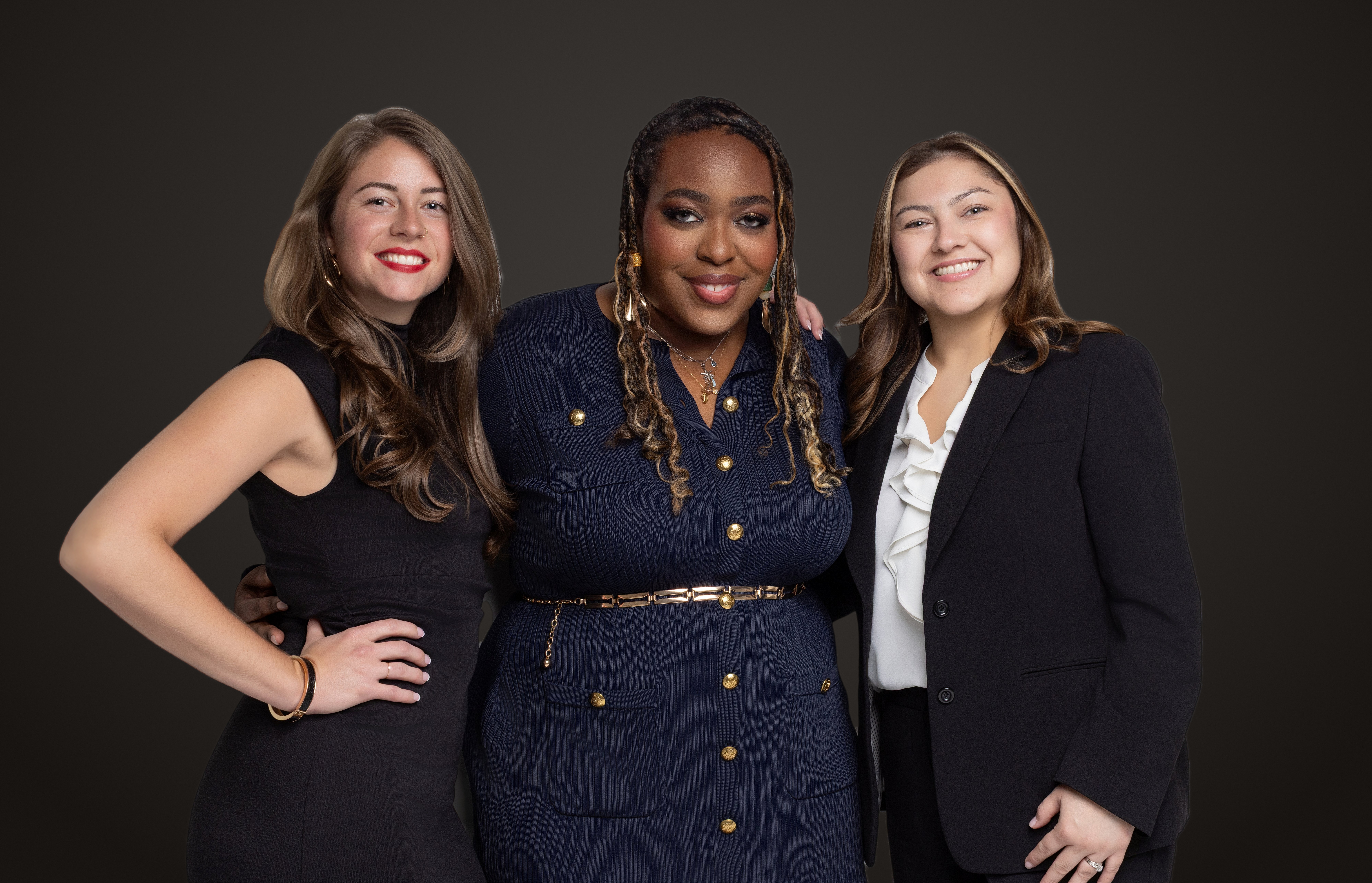
Czestochowa Francois & Laura Steenberg
Your Body Is Desperately Trying to Keep You Alive: Dr. Czestochowa Francois and Laura Steenberg on What Your Legs Are Really Telling You
She came from emergency medicine wanting to prevent the emergencies. Her colleague came with a passion for education that reaches from exam rooms to community events to 2:00 AM texts from collaborators with new ideas. Together, they’re changing what it means to be heard in a doctor’s office.
From the Emergency Room to the Vein Clinic
Dr. Czestochowa Francois did not take a conventional path to vascular medicine. She came from emergency medicine, a fast-paced, triage-driven world. Anyone who has watched the show “The Pitt” will recognize it as bracingly accurate. You treat and move, treat and move. There’s rarely time to spend with a single patient, so relationships are necessarily brief.
She was good at it. She loved it. And eventually, she noticed something that changed everything.
“I started seeing a lot of patients who we could help prevent from getting into that emergency setting, where they would have to be hospitalized with all these other things playing a role,” she says. “And it was like, if we can break the cycle in the first place, then maybe they wouldn’t have to be seen in the emergency room.” That preventive logic pulled her toward vascular medicine with a force she hadn’t expected. Catching a problem early in an outpatient setting could spare someone a very different kind of crisis down the road.
A friend told her she’d be good at it. Her husband thought the pivot was random. She doesn’t think so now. “My practice as a vascular medicine doctor enriches my understanding as an emergency medicine doctor, and vice versa,” she says. “I can tell when a patient needs emergency care versus when it’s something I can manage in the outpatient setting.” And the vein clinic gives her something the emergency room almost never did: time. Time to sit with patients, have a real conversation, and get to know someone. “I’m cheating a little bit,” she says, laughing. “But I’ll take it.”
Laura Steenberg came to the Center for Vein Restoration as a physician liaison, a role that sits where clinical care meets the community. She works alongside Dr. Francois in the Leesburg, Purcellville, and Winchester offices. She talks about her job like someone who has found exactly the right fit. “I’m constantly educating,” she says. “And it’s one of the things I love most about my job — because there are so many underdiagnosed patients out there.”
The Legs That Carry Us (And What They’re Saying)
Most people don’t think about this until they have to. Your legs carry you through every day of your life, and they’re constantly sending signals. Most of us aren’t listening.
“You walk on them. They carry you — physically and metaphorically,” Dr. Francois says. “But we don’t really care for them individually. And they can show us a lot of things about what’s going on in the body.”
Dr. Francois and Laura focus on three conditions: chronic venous insufficiency, lymphedema, and lipedema. Each is distinct, but they often overlap. All three are far more common, and far more underdiagnosed, than most people realize. In venous insufficiency, the valves in the veins don’t properly return blood to the heart. Blood pools, causing swelling and discomfort, and over time it can lead to more serious complications. Varicose veins, which bulge visibly under the skin, are one of its best-known signs. But they’re far from the only one.
“Sometimes patients come in with larger varicosities or skin changes or even venous ulcers,” Laura says. “But oftentimes you don’t see those visible symptoms. Sometimes it’s just fatigue.” She lingers on that word. Tired legs, heavy legs, that particular ache at the end of a long day: this is exactly the kind of symptom most people learn to dismiss. Women especially.
“As women, especially those of us who are mothers — we’re used to being on our feet all the time. We’re used to being tired at the end of the day. We’re used to shrugging that off and not paying attention to our bodies as much as we should, because we’re busy caring for everyone else.”
Symptoms worth watching include leg fatigue, cramping, and aching around visible veins. Look for swelling that leaves a sock line at the end of the day, and heaviness after long periods of standing or sitting. Genetics play a role, too. If grandparents, aunts, or uncles have varicose veins or swelling, your risk rises significantly. And women, particularly women of color, tend to reach the clinic at later stages. Many have spent years minimizing symptoms that deserved attention much sooner.
“Just come in,” Dr. Francois says simply. “If you’re seeing something, if you’re feeling anything strange — don’t dismiss it. And I tell providers the same thing: you don’t have to figure out whether it’s a blood clot or simple venous insufficiency. Just send them to us. We’ll help with the triage.”
She firmly believes everyone should have a venous screening at least once. She compares it to the baseline echocardiogram many cardiologists recommend. “Just by benefit of being alive and walking this earth, you’re going to have some degree of it. You just want to know to what extent.”
The Hidden Epidemic of Lipedema
If venous insufficiency is underdiagnosed, lipedema is in another category entirely. It is poorly understood, frequently missed, and consistently dismissed. Patients often spend years, even decades, hearing the same wrong advice: just lose weight.
Dr. Francois describes lipedema as an inflammatory connective tissue disorder. It causes fat to build up in specific weight-bearing areas of the body. The fat has a distinct shape, it gets worse over time, and, crucially, it doesn’t respond to diet and exercise the way typical body fat does. With dry humor, she calls it “the Kim Kardashian effect.” The body type it produces has been culturally visible for generations, yet no one named the condition behind it.
“People with lipedema are often told to just lose weight,” she says. “But it’s not that simple — because the type of fat they accumulate actually increases their fat gain, and the inflammatory aspect makes it very hard to lose weight overall with typical approaches. Even trying diet and exercise, if not done in very specific ways, can actually increase the stress response and make it worse.”
Lipedema often appears alongside venous disease and lymphedema. Patients go undiagnosed for so long that by the time they arrive, several body systems are involved. The consequences go well beyond appearance. Chronic pain limits mobility. Limited mobility raises cardiovascular risk. And women, who make up most lipedema patients, are already more likely to have silent heart attacks and strokes. They’re also more likely to push through symptoms that should stop them in their tracks.
“Insomuch as we can stop that cycle and prevent that from worsening,” Dr. Francois says, “you’re talking about really affecting women’s lives. That’s why the lipedema aspect is important — not just because of the cosmetic dimension, but because of what it affects down the line.”
Insurance complicates diagnosis. Lipedema doesn’t yet have its own ICD code, though that’s expected to change in 2027. Dr. Francois and Laura are watching closely. Experts are few, and awareness is limited. Even clinicians who want to help often haven’t had the training.
“How do you diagnose something you’ve never seen?” Dr. Francois asks. It’s not a rhetorical question. It’s an honest acknowledgment of the gap between what medicine knows and what doctors were taught. “If all you have is a hammer, everything looks like a nail. But as we expand, as we learn more things, clinicians will have a lot more in their toolbox.”
She and Laura are traveling to Virginia Beach to observe a lipedema surgery and meet specialists further along the treatment path. They are learning in real time, alongside their patients. They say so openly, and that honesty is part of why patients trust them.
What “Being Heard” Actually Looks Like in a Doctor’s Office
At one point in our conversation, Dr. Francois describes her philosophy of patient care. It captures something rarer in medicine than it should be.
“I never go into a consultation and say, ‘You need treatments,'” she says. “I abhor that. Usually I say, ‘How do I meet you halfway so that this fits into your life?’ I come with the information, you come with your body. We can meet in the middle and figure out what is needed.”
She sees patient and physician as collaborators, not as authority and recipient. That view runs through everything she does. She doesn’t dismiss Google diagnoses. Instead, she asks patients to explain their reasoning, because sometimes they’ve found something real that she hadn’t yet considered. She’s just as direct about what she doesn’t know as about what she does. She gives patients her direct contact information. And when someone says they truly need to be seen, she squeezes them in.
“If what matters to you, matters to you — it should matter to the provider,” she says. “Whether or not they believe it’s a real issue, they have to educate you about it. At the very least.”
To her, medicine is an art form, not fast food. “You’re not going to rush an artist. You just wait for them to come up with a Picasso,” she says. Some patients have taken a year to fully diagnose. She asks them to stay with her through the process, and she stays with them. “Not everyone loves my art,” she says, with characteristic candor. “But I try to impress upon them that what is important to them is important to me.”
Laura points out that being heard doesn’t only happen in the exam room. The clinic hosts community events and support groups, especially for lipedema and lymphedema patients. Many of these patients have spent years being dismissed, misdiagnosed, or medically gaslit. The gatherings let them meet others living the same experience. “Every single patient’s story seems to be eerily similar,” Laura says. “They’ve been under-diagnosed. They’ve been told to just lose weight. A lot of changes have happened during menopause or perimenopause, and no one connected the dots.”
The events bring in more than Center for Vein Restoration providers. Cardiologists, pelvic floor therapists, acupuncturists, mental health professionals, and other specialists from across Loudoun County take part. Together, they create something a clinic can’t manufacture on its own: community. Patients learn they aren’t alone, aren’t imagining it, and haven’t reached the end of the road.
“These are primarily women who are underserved,” Laura says. “And we’re creating a space for them to feel heard. Not only are they being given actual diagnoses — but also resources, education, support, friendships, mental health support.”
The Most Profound Thing a Surgeon Has Ever Said
Dr. Francois has told this story before, and she still feels it every time.
She was frustrated with her own health, she was struggling with her weight and not seeing the results she expected. She was exhausted, too, in the way doctors who care for everyone else often are, and often the last to notice. Her husband, a bariatric surgeon, said something that stopped her cold.
He said: “Your body is just this small creature that is desperately trying to keep you alive.”
She pauses. “It has carried you, it has taken care of you when you were cold, it is your shelter, it is your home.” What he said next still makes her tear up. “Every scar is it protecting you. It tells a story.”
His prescription wasn’t a diet plan. It was kindness. “Just be kinder to it,” he said. “You had a burger? Tomorrow, salad. Just think of your body as something that’s struggling to do everything to keep you alive every day. You take care of your children, you take care of your parents. You take care of your spouse, you don’t think twice about that. How often do you actually think about taking care of yourself?”
Dr. Francois laughs that this wisdom came from a surgeon. Then she turns serious. She believes it gets at the heart of why any of this matters. Women’s instinct to care for others can put their own health at real risk. She points to stress cardiomyopathy, often called broken heart syndrome. It’s a real, documented condition, and it disproportionately affects women. “We can die of a broken heart,” she says. “Because of our sense of nurturing. That is a real thing. And it should be a real reminder that taking care of yourself is not indulgent. It is survival.”
Don’t Just Judge the Doctor — Judge the Whole Team
Dr. Francois offers one quieter piece of advice that’s especially practical. When you evaluate a medical practice, don’t just evaluate the physician.
“Judge them by their staff,” she says. “Find the person who sits with you and says, ‘Hey, let me explain this to you. Let me talk to you about this.’ That matters.” She’s the first to say that the people around her make her long patient conversations possible. Laura educates referring providers and patients with equal energy. Office coordinator Cindy handles the operational details that free up clinical time. And colleagues who share her philosophy take referrals seriously.
“It really takes a village,” she says. “I come to the room — Cindy has already set me up to do that. So I think that’s a piece of advice: find a doctor’s office, not just a doctor.” Your relationship with a medical team is bigger than any single appointment. A staff that explains, follows up, and actually listens when you call is part of your care.
Laura adds a practical reminder: share everything with your providers. Don’t filter out what seems irrelevant or too small to mention. “Bring it all up. Your provider can only treat what she knows. So give her as much information as humanly possible.” And if a provider dismisses a symptom that matters to you without explaining why, that tells you something too. “Find the provider that’s right for you,” Dr. Francois says. “I’ve gone doctor shopping myself. I really have. We all do.”
What’s Coming: A Women’s Health Event Built on Shared Purpose
The community Dr. Francois and Laura helped build is preparing for its next gathering. It’s a women’s health event featuring nine providers, including a cardiologist, a mental health therapist, a pelvic floor therapist, and a hormone specialist. All of them share the belief that patients deserve real education, real conversation, and real care.
The event is organized through Dr. Cruz’s office at mywellnessphysicians.com, where an Eventbrite link will be posted. It follows a previous event in May. Dr. Francois and Laura find the pattern deeply meaningful: speakers who return, providers who came once and came back, and people who give up a Saturday because they believe in the community.
“They care enough to take time out on a Saturday to educate people,” Laura says. “And those are people we like to send our patients to — other specialty providers who care as much as we do. We’re all in it together.”
At its best, that’s what the Center for Vein Restoration means in Loudoun County. It isn’t just a clinic that treats legs. It’s a team of people building something larger: a community that learns from each other, shows up for each other, and won’t let anyone navigate their body alone.
“There is a team out there for me,” Dr. Francois says, describing what she wants every patient to believe when they leave. “There are physicians out there for me. I don’t have to be scared of my body or the things that are going on. And I’m empowered to learn more about this.” She pauses. “If people walk away feeling that — then I’ve done something well.”
Connect with Dr. Francois and Laura Steenberg
Center for Vein Restoration: Offices in Leesburg, Purcellville, and Winchester, Virginia
Women’s Wellness Events: mywellnessphysicians.com (look for the Eventbrite link for upcoming events)
For patients with symptoms of venous disease, lymphedema, or lipedema — or those who simply want to understand more about what their legs are telling them — reaching out to the Center for Vein Restoration is the place to start.
Reach Czestochowa & Laura Below
Website:
Center for Vein Restoration Website
Listen on the Podcast: Podcast Episode



Read the Comments +