Lessons from Local Leaders:
Dan Peiffer
The Coach Who Doesn’t Look Like a Coach: How Dan Peiffer Is Redefining What Leadership Development Can Look Like
He spent decades leading in environments where the decisions actually mattered. Now, Dan Peiffer is taking everything he learned and asking a simple, powerful question: what would change if people knew how to lead themselves first?
The Guy Who Laughed When Someone Called Him a Coach
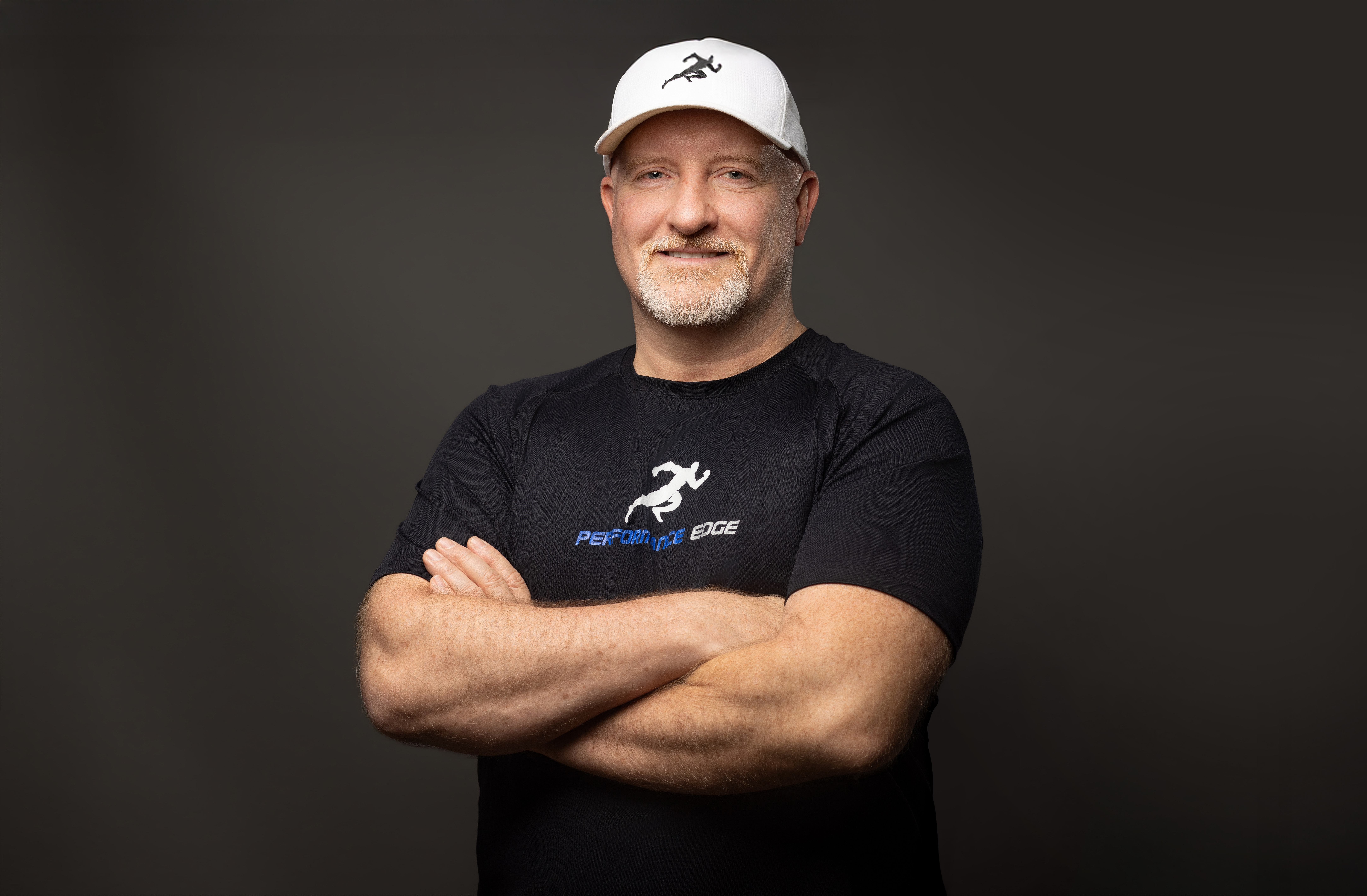
Dan Peiffer is not what you picture when you hear the word “coach.”
He’ll tell you that himself, and he’ll do it with a grin. When someone first approached him with the idea that he’d be good at coaching, his response was immediate and unambiguous: no way. “I’m covered with tattoos. I don’t miss a day in the gym,” he recalls. “Somebody might look at me and think, ‘This guy might have gotten out of prison a couple weeks ago.'”
But then something shifted. He took a step back and looked at the coaching industry itself. A field he describes, accurately, as predominantly middle-aged and female. And he realized that the very things that made him feel like an outsider, were actually the things that would make him stand out. And more importantly, make him effective. Because when a tattooed Marine veteran walks into a room and says he’s going to ask you hard questions about who you are and what you’re capable of, people pay attention in a different way.
“When you get to know me, you’re like, ‘Oh, big teddy bear. This guy genuinely cares about people, wants to help people.'” And that is exactly the point. Dan Peiffer, founder of Inspire Leadership and Life Coaching, has built a practice that is as wide-ranging as it is deeply intentional. Serving C-suite executives, military leaders, professional sports teams, business owners, parents, and high school and college-age students and athletes. The common thread across all of them isn’t rank or profession. It’s a belief that every person, at every level, has more in them than they’ve yet discovered.
Accountability Has No Rank
Long before Dan was a coach, he was a Marine. And it was in that environment that his foundational philosophy took shape — a phrase he spent a little time working out, and that now sits at the center of everything he does.
Accountability has no rank.
What it means, stripped down to its core, is simple: your title, your position, your rank on your collar or your nameplate on the desk — none of it determines whether you show up as a leader. Leadership is about facilitating forward movement in a positive direction. It’s about making decisions and helping others make them. And that capacity exists in every person in the room, regardless of where they sit in the hierarchy.
“Being a leader is simply helping make decisions, facilitating movement forward in a positive direction to accomplish a goal,” Dan says. “It’s that simple.”
He’s quick to note that the Marine Corps taught him what formal leadership looked like — but it also taught him something more nuanced: the difference between a title and the real thing. When someone is placed into a leadership position without truly understanding what leadership demands of them, he says, things get dangerous. “They’re making decisions and trying to influence people without understanding who those people are.” It’s a pattern he sees constantly in organizations, and it’s one of the central problems his coaching is designed to address.
Slowing Down When Everything Speeds Up
One of the most useful things Dan carried out of the Marine Corps wasn’t a tactic or a management framework. It was perspective.
When a situation escalates — emotions run high, decisions feel urgent, pressure mounts — his first move is to ask a quiet internal question: are we actually talking about something life or death right now? Almost always, the answer is no. And that single reframe, he says, is enough to bring everything down a notch.
“What’s the worst that can happen right now in this moment? Typically it’s maybe somebody’s emotions are high, maybe we miss a deadline slightly. It’s just really trivial type things.” By recalibrating the stakes, Dan can slow his own nervous system down — and from that place of clarity, make better decisions. The practical mechanism is straightforward: breathe, oxygenate the brain, slow the heart rate, and then start evaluating options.
It’s a technique that translates directly from a combat zone to a conference room. And Dan is careful to note that the problem — reactive, emotionally-driven decision-making — isn’t new. He doesn’t subscribe to the idea that modern culture has created some unprecedented crisis of emotional regulation. What’s changed, he thinks, is visibility. Social media amplifies the bad decisions that people have always been making. The solution, now as ever, is learning to slow down and think.
The Three Levels of Listening (And Why Most People Are Stuck at Level One)
Ask Dan what the biggest communication mistake he sees leaders making is, and he doesn’t hesitate.
“Listening. Absolutely. One hundred percent listening.”
His signature program, The Edge Series, is a five-part course on communication — and the very first module is called Third Level Listening, because Dan believes most people have never actually been taught what real listening looks like. He breaks it into three tiers.
Level one is listening to respond. You’re sitting across from someone, but most of your mental energy is already going toward formulating what you’re going to say next. You catch the broad strokes, but you miss the texture. Level two is what most people think of as “active listening” — nodding, parroting phrases back, signaling that you’ve heard. Dan calls this level parroting, and he’s not impressed by it. “Are you actually listening,” he asks, “or are you just really good at hearing things and repeating them back?”
Level three is where it gets interesting. At the third level, you’re processing not just the words being said, but everything around them. The tone of voice. The shift in body language. The tempo of speech. And crucially — the things that aren’t being said at all. “What are the things that they’re not saying?” That question, asked with genuine curiosity, is what separates a great listener from everyone else.
“Leaders just struggle with that idea. They hear the words and they think that they got it, and they’re ready to make a decision or give direction. But what are they actually saying? What are you missing?” The cost of that gap, in Dan’s experience, is enormous — in lost trust, in poor decisions, in missed opportunities to truly understand the people you’re trying to lead.
The Advice Trap, and Why Curiosity Is the Antidote
Closely connected to listening is a concept Dan calls the advice trap — and it shows up everywhere, from the C-suite to the kitchen table.
The advice trap is what happens when someone hears a problem and immediately moves to fix it. It feels helpful. It comes from a good place. But it skips something essential: curiosity about whether you actually understand what’s going on, and whether the person in front of you is even looking for a solution.
“Sometimes they’re sharing with you not because they’re looking for the answer, but because they’re looking for the opportunity to just vent and say it out loud so they can think out loud,” Dan explains. When you skip past that and deliver your answer anyway, you may have addressed the surface — but you’ve missed the real conversation underneath.
His antidote, in coaching and in life, is to stay curious. “Why do they believe that to be true? What are some other things that have worked in the past that might be applicable here? What would it look like if we tried this instead?” These aren’t stalling tactics. They’re the questions that help people arrive at insights they couldn’t have reached on their own — which is, ultimately, what makes those insights stick.
The acronym Dan uses in his work captures it memorably: WAIT. Why Am I Talking? It’s a four-word check-in that, if practiced consistently, can fundamentally change the quality of every conversation you have.
Seeing What Others Miss
There’s a phrase at the center of Dan’s coaching philosophy: seeing what others miss. In practice, it looks like a very specific kind of presence — one that requires setting aside your own certainty long enough to get genuinely curious about someone else’s reality.
When a client comes to Dan convinced they know exactly what their problem is and exactly what the path forward looks like, Dan doesn’t challenge them directly. He gets curious. “Okay, you believe this to be the problem. Why do you believe that? Where do those beliefs come from? What are the possibilities if we were to go in a different direction?”
The questions don’t lead anywhere predetermined. They’re designed to create space — space for the client to take a step back from the problem they’re inside of and see it from a different angle. “That’s where all the magic happens,” he says. “They start learning about themselves. They start learning about their problems. And then they start being able to formulate a path forward that they’re going to take ownership of.”
This is the distinction Dan draws consistently between coaching and mentorship. A mentor shares their experience and says, here’s what I did, here’s how it worked, here’s what I’d do in your position. That has real value. But coaching is something different. “My goal is not to give you the answers,” he tells every new client from the start. “When you’re honest and open with me, you’re being honest and open with yourself. And that’s what allows us to explore what’s really going on.”
The Ego Question
Dan is thoughtful on the subject of ego — a word that shows up constantly in conversations about leadership, often as a villain. His take is more nuanced.
Ego, he says, lives on a spectrum. On one end, it tips into overconfidence — the belief that you have all the answers, that no one else knows better than you, that correction is an attack. That’s the dangerous side. But flip to the other end, and ego looks entirely different: confident enough to know you’re good, expert enough to command a room, but humble enough to hold space for the possibility that someone else in the audience might know something you don’t. “That’s the sweet spot,” he says. “Where we can look at it either negatively or positively.”
Getting C-suite clients to that sweet spot is often one of the first challenges in a coaching engagement. Executives who have built successful careers have evidence, real and substantial, that their approach works. Asking them to acknowledge blind spots they haven’t been able to see on their own requires a particular kind of trust. Dan’s response is to remind them of who else has said yes to that vulnerability: Tony Robbins, Oprah Winfrey, Bill Gates, Metallica. “In all of his fame and success, Tony Robbins acknowledges that he can be better — that there are blind spots he can’t identify on his own.” If the most successful people in the world are still actively working to grow, what does it say to dismiss the idea?
What He Didn’t Have as a Kid
There’s a personal thread underneath all of Dan’s work that he hadn’t examined much until someone asked him about it directly.
“I’ve never really thought about it from a childhood perspective,” he admits, then pauses to actually think. What he lands on is honest and a little tender: maybe it was because he didn’t have someone like him available when he was growing up. Not that his parents failed him — he’s clear that they were exceptional, that they taught him well and modeled what they could. But they also had the thing most parents have: an unshakeable certainty that they knew what was best for their kid. And so the questions never got asked. The ones about what was actually important to young Dan. Where he saw himself in five years. What he imagined his life looking like.
He made decisions that were rushed and emotion-filled, as young people often do. And what he notices now, watching the young adults he works with, is that the same pattern continues — not because anyone means harm, but because no one has thought to ask differently.
“The coolest thing is to sit there and challenge a young adult’s beliefs — and watch the look on their face when you do it, because nobody asks them questions like that. And then watching them take a step back and actually think about what’s important to them.” He calls it powerful. He’s right.
Tier One Athlete: Where He’s Headed
Right now, the initiative Dan is most energized about is the Tier One Athlete program — a coaching experience designed specifically for student athletes in the Northern Virginia area.
The context matters. Dan has looked at the numbers: over 60,000 high school student athletes in this area alone. Many of them are being guided by parents who are deeply invested in the idea of their child playing at the next level — investing in travel teams, skills camps, weekend tournaments. All of it valuable. But Dan notices a gap in something less visible: the inner work. The questions about who these young people are as leaders, what drives them, how they want to show up in the world beyond their sport.
“Sports are an incredible opportunity to learn important life lessons,” he says. “How to win, how to lose, how to work as a team, how to communicate under stress. If I can find my place within that development and show these young adults how leadership shows up in their sport — and then show them how that can be applied beyond their sport — this is an opportunity to take them so much further than the sport itself offers.”
The vision is a long one. He’s working to establish a presence in Loudoun County schools, to create the kind of access and scale that individual coaching can’t reach. The goal isn’t just to help athletes perform better. It’s to send them into adult life already knowing something about themselves that most people spend years trying to figure out.
The Axis Method, and the One Question You Should Be Asking
Dan’s Axis Method takes a familiar tool — strengths assessments like Gallup StrengthsFinder — and builds something richer around it. The assessment itself is just the starting point. What Dan does is take the data and layer conversation on top of it: who are you right now, who do you want to be, and how do your strengths show up in service of that journey — and sometimes, in friction against it?
The most memorable concept from the Axis Method might be the simplest one: WAIT. Why Am I Talking? It’s both a communication check and a leadership philosophy in four words. In any given moment, am I adding something? Is this the time to speak, or is it time to create space? Is the other person waiting for my words, or do they need my silence?
The Axis Method also works for couples — something Dan mentions with the kind of careful confidence of someone who has seen it work firsthand. He’s not a therapist, he’s clear on that, and he’s equally clear about when someone should be working with one instead. But what coaching does — getting curious about the friction, understanding each person’s perception of the problem, creating space to move forward together — “by nature, although it’s not therapy, it becomes essentially therapeutic.”
After 25 Years, One Lesson He Wishes He’d Learned Earlier
Dan has been asked what he wishes younger Dan had understood sooner. His answer is both personal and universal.
“Seeking out knowledge. About yourself. About the type of leadership or the industry you’re in. So that you could be better informed about all aspects of the group you’re leading.” He laughs a little at the thought of putting 21-year-old Dan Peiffer, Marine, in a room with a coach. “I would’ve laughed. No way.” He wouldn’t have seen the value. He wouldn’t have understood that getting curious about yourself, the way you see things, the blind spots you carry — that this is not weakness. It’s the foundation everything else gets built on.
He didn’t appreciate books. Didn’t appreciate studying people and leadership. “Now, as a much more mature, wiser person, these are things I wish I would have understood at a much younger age.” And he’s building the programs he wished had existed — so others don’t have to wait as long to find them.
Connect with Dan Peiffer
To learn more about working with Dan one-on-one or in a group setting, or to explore the Tier One Athlete program for student athletes and families, visit www.tieroneathlete.net.
For coaching inquiries, leadership development programs, and The Edge Series, connect with Dan through Inspire Leadership and Life Coaching.
Reach Dan Peiffer Below

Website:
Inspire Leadership & Life Coaching
Listen on the Podcast: Podcast Episode





Read the Comments +