



Lessons from Local Leaders:
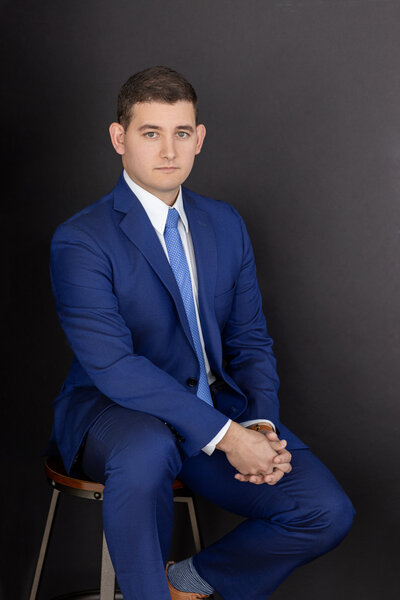
Dr. Tyler Chavez
From Patient to Provider: How Tyler Chavez Is Bringing Longevity Medicine to the Center for Plastic Surgery
He spent his childhood in a hospital fighting leukemia. Three years ago, he received a heart transplant. In between, he built a 14-year career in medicine — and somewhere along the way, he became one of the most uniquely qualified people in the country to tell patients: I understand what it’s like to be on your side of this.
Tyler Chavez has a way of framing things that cuts through the noise of a field that currently has a lot of noise. Peptides. Longevity medicine. Metabolic health. GLP-1s. These words are everywhere right now — on social media, in podcasts, in supplement store ads, in football game commercial breaks.
Tyler has been working in this space for five years, long before the explosion. He was skeptical of it at first, in the careful way that good clinicians are skeptical of anything new. He did the work to learn it properly. And now, as the director of the Metabolic Aesthetics program at the Center for Plastic Surgery, he’s watching a field he built expertise in become the thing everyone suddenly wants — and making sure the patients who come through his door get the real version, not the shortcut.
A Different Kind of Medical Education
Most providers can tell you what it’s like to be on the clinical side of a health crisis. Tyler can tell you what it’s like to be on both sides.
He was diagnosed with leukemia at a young age and lived in hospital settings for years during treatment. When that chapter ended, he knew what he wanted to do with the rest of his life. Medicine felt like the most natural way to give back — to be for someone else what the providers around him had been for him.
He became a physician assistant, spent his career in surgery, and built a practice around one-on-one, thorough, personalized care. Then, three years ago, he received a heart transplant.
“I’ve been the provider for a long time,” he says. “But I’ve also been in a very serious patient role. Anytime someone’s a patient — whether they’re just coming in for the first time, or they’ve been dealing with chronic illness — having that perspective gives you more empathy. More insight into how best to approach each patient and each situation.”
He doesn’t say this to make it about himself. He says it because it genuinely shapes the way he practices medicine — and because patients feel the difference when someone treats them like a person rather than a case file.
The Metabolic Aesthetics Program: What It Actually Is
The Center for Plastic Surgery has always been about helping people look and feel better. The Metabolic Aesthetics Clinic, which Tyler directs, takes that mission further — into cellular medicine, hormone replacement therapy, peptide programs, and longevity-focused care.
The patients who walk in aren’t necessarily looking for surgery. They’re looking for the version of themselves that feels like it used to — or better. They want less inflammation, more energy, a healthier body composition, a clearer picture of what’s actually going on inside them. They want sustainable results, not crash diets or quick fixes.
“Really it is about making patients get to their goals,” Tyler says. “Whether that be weight loss, decreasing inflammation, or just overall feeling better. Especially in today’s medicine, where you get put into a small box and filter down to where your problem might lie — without looking at the overall general feeling.”
The program runs full bloodwork, body composition scans at every visit, and a comprehensive intake process that asks where you are, where your health and fitness stand, what your hormones look like, and what your goals actually are. That last part, Tyler emphasizes, is the part too many providers skip.
“If a provider isn’t asking you what your goals are or what you want to improve, they’re probably just going to give you a cookie-cutter plan. Something that will make you feel better, but not tailored to your exact needs.”
When Plastic Surgery and Longevity Medicine Meet
One of the most compelling aspects of Tyler’s work is what happens at the intersection of surgery and metabolic care — a combination most clinics can’t offer because most clinics specialize in one or the other.
At the Center for Plastic Surgery, they offer both. And the synergy is significant.
Every patient who has surgery — whether it’s cosmetic, reconstructive after breast cancer, or orthopedic — wants the same things on the other side: minimal scarring, minimal downtime, less swelling and bruising, faster return to normal life. Peptide programs and optimized metabolic health can directly support all of those outcomes. Tyler knows which peptides help with scar formation. He knows how to optimize a patient before a procedure and what to recommend in recovery to speed their return.
“There is no patient out there that wants to take longer to heal,” he says. “Knowing what goes into a surgery — both the surgical approach and what’s going to be required afterward — I’m able to tailor things better. This will get you on your feet faster. This will help minimize your scar tissue or swelling.”
It’s whole-picture medicine. And in a landscape where most patients are accustomed to siloed care — one provider for the surgery, another for the recovery, another for the general wellness questions — having all of that under one roof makes a real difference.
What the Online Explosion Gets Wrong
Tyler was working in longevity and peptide medicine before most people had heard the words. He watched the field grow from a niche area of clinical interest into something that now appears in every corner of social media — and he has a measured, honest take on what that explosion has brought.
The awareness is largely good. More people are asking questions about their metabolic health. More are interested in understanding inflammation, hormones, and what their body composition actually looks like versus what the scale says. That’s progress.
But the shortcut-seeking that comes with viral trends is real, and it concerns him.
“People feel like they can maybe find it somewhere, or take small shortcuts,” he says. “And safety is a big thing. People are able to find quick fixes online that might not be as safe as possible.”
His advice is simple: find a provider you trust, sit down with them, and have a real conversation. Not a consultation that ends with a pre-packaged program. A conversation where someone actually listens to what you’re trying to accomplish, looks at your bloodwork and body composition, and builds something specific to you.
“You don’t have to know anything about peptides,” he says. “Just come with an open mind and trust the process. Hope that you have someone who will be well versed and take your safety as number one.”
The Scale Isn’t the Only Number That Matters
One of the most practical things Tyler talks about is something patients discover during their first few months in a program: progress doesn’t always look like weight loss on a scale, and if the scale is the only metric, people get discouraged and give up before the real results show up.
At the Metabolic Aesthetics Clinic, every visit includes a body composition scan. That scan shows what the scale doesn’t — that a patient may be losing body fat percentage and gaining muscle simultaneously, which is the ideal outcome, even while the number on their bathroom scale stays flat or moves slowly.
“Their weight’s not going down, but they’re losing percent body fat and they’re gaining muscle,” Tyler explains. “Which is the best possible thing. But if they’re only looking at one number at home, they get discouraged. Having that reinforcement as a provider — things are really looking better for you — that’s where people should focus.”
It’s a simple shift in measurement, but it keeps patients in programs long enough to experience the results that make them call and say: I can’t believe I didn’t find this sooner.
Men’s Health: A Growing and Often Overlooked Piece
One area the clinic is actively expanding is men’s health — a space where, Tyler notes, there is often significant need and comparatively little personalized, quality clinical attention.
Hormone replacement therapy, conversations about testosterone, erectile dysfunction treatment, and even penile enhancement using specialized, long-lasting fillers are all part of what the clinic now offers for male patients. Tyler is direct about naming these services without apology — because the patients dealing with these concerns deserve the same level of clinical care and discretion as anyone else.
“Everyone has questions about it,” he says. “And there is no patient who wouldn’t fit into a category where we could help them get to their goals or feel better.”
The Patient Who Comes Back and Says: Where Was This Sooner?
There’s a moment Tyler describes that stays with you — the patient who completes a six-month program, or has been with the clinic for a year or more, and reaches back out to say: this changed my life. Where was this sooner? Why didn’t I know about this?
That response, he says, is probably the best thing.
“Just to be happy is probably the best goal for patients.”
Coming from someone who has been a leukemia patient, a heart transplant recipient, a 14-year veteran of surgical medicine, and the architect of a longevity program that sits at the intersection of science and whole-person care — that simple statement carries a lot of weight.
He’s not trying to sell a trend. He’s trying to make something genuinely useful, genuinely safe, and genuinely accessible to people who are ready to invest in feeling better for the long run.
That’s what the Metabolic Aesthetics Clinic is for. And that’s who Tyler Chavez is.
Tyler Chavez is a physician assistant and Director of Metabolic Aesthetics at the Center for Plastic Surgery. To learn more or schedule a consultation, visit cpsdocs.com or find the clinic on Instagram, Facebook, and Google.
Reach Lasaunia Thompson Below

Website:
cpsdocs.com
Listen on the Podcast: Podcast Episode





Read the Comments +